ProtectPut people and immediate electrical or contamination hazards first.
Mission water-damage information
Water-damage restorationand structural drying in Mission, BC.
Learn what extraction, moisture assessment, structural drying, mould cleanup, and loss documentation can involve before choosing a provider.
Short request form available. Tell us what happened and where.
ControlStop the moisture source when it is safe to do so.
DocumentRecord visible conditions, dates, and affected areas.
AssessUse qualified, property-specific advice for extraction and drying.
Water-loss topics
One event. Connected decisions.
Review the sequence from immediate safety and source control through extraction, drying, mould considerations, and records.
01020304
Water Extraction
A Mission, BC guide to safety, source control, standing-water removal, affected-material checks, and the questions to ask before cleanup begins.
Plan the first decisions without confusing extraction with complete structural drying. →Structural Drying
How moisture maps, material checks, airflow, dehumidification, monitoring, and completion criteria shape a structural-drying plan in Mission.
Know what evidence to request before equipment is placed or removed. →Mould Remediation Information
Health Canada-aligned guidance on moisture control, mould-area size, cleanup precautions, porous materials, hidden conditions, and professional assessment.
Use the affected area and conditions—not mould colour—as the starting point. →Water-Loss Documentation Guidance
A practical Mission homeowner checklist for photos, timelines, damaged-item records, scopes, moisture notes, receipts, and insurer conversations after a water loss.
Build one factual record while leaving policy and coverage decisions to the insurer. →The part water can hide
Dry-looking is not the same as assessed.
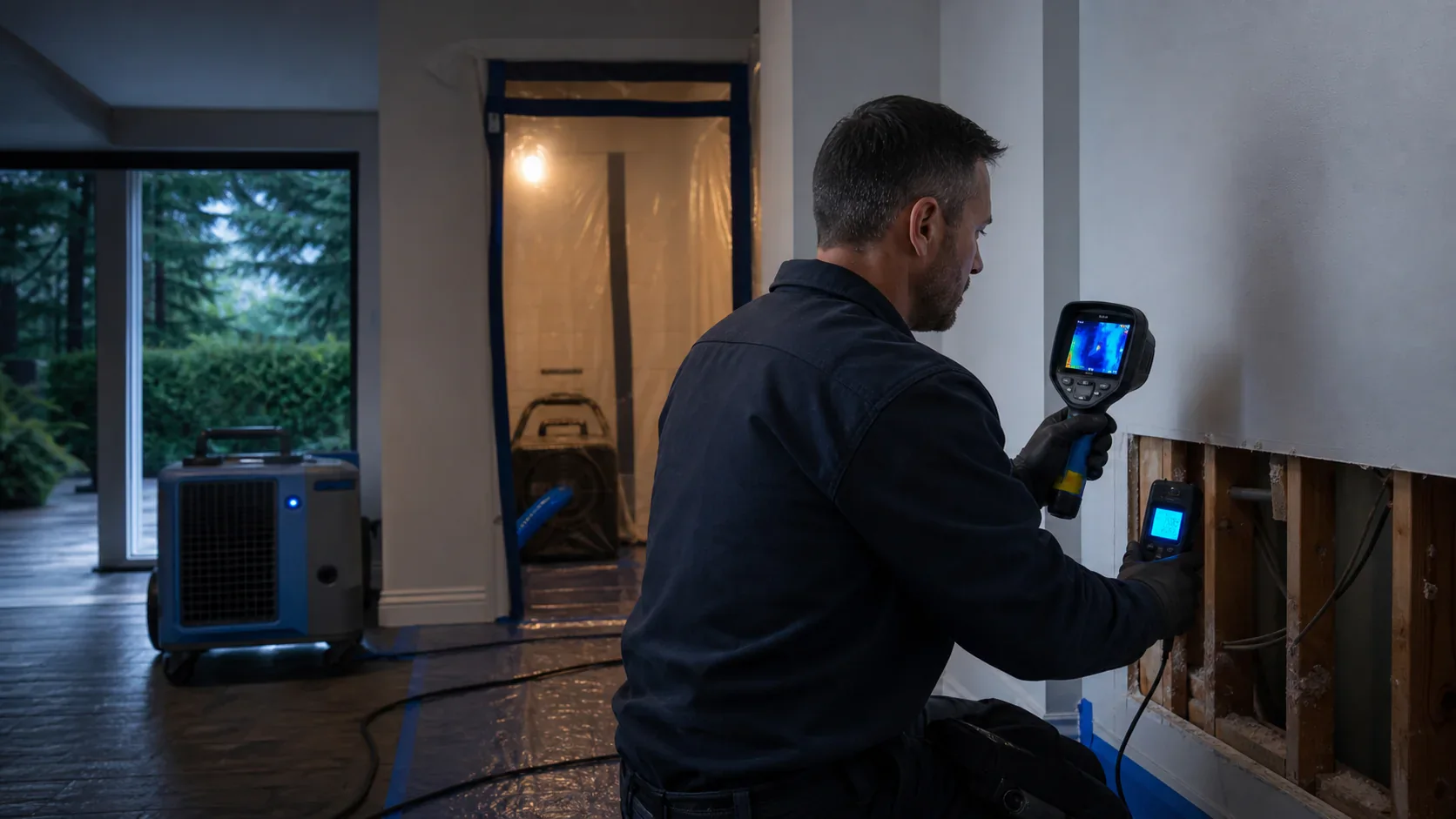
Move the scanner across the illustration. Appropriate instruments can add context about wall, floor, and cavity zones.
Drag to reveal
50%scan position
Moisture assessment
Measure before assumptions.
A qualified assessment can consider the source, affected materials, and appropriate readings. This visual is explanatory, not a property diagnosis.
The first 48 hours
Prompt moisture control matters.
This is a priority guide, not an attendance promise, damage forecast, or substitute for property-specific advice.
Priority 01 · Protect
Put safety before property.
Keep people away from electrical and contaminated-water hazards. Control the water source only when it is safe, and contact emergency services or the appropriate utility for immediate danger.
- Identify immediate hazards
- Control the source when safe
- Photograph visible conditions
How drying is evaluated
Ask to see the logic behind the work.
A useful provider scope explains what was observed, what is proposed, what will be monitored, and how completion is assessed.
- 01Assess
Affected zones, not guesses.
A qualified assessment can begin with the source and follow likely water paths through adjoining materials.
- 02Plan
Equipment with a reason.
Equipment choices should reflect room geometry, materials, access, and measured environmental conditions.
- 03Track
Readings add context.
Progress observations can show whether conditions are changing and whether the approach needs adjustment.
- 04Verify
Define the finish line.
A provider should explain the observations or targets used to close out drying rather than rely on appearance alone.
Questions to carry into a provider call
Clarity belongs in the scope.
Property-specific observations, visible decisions, and clear consent boundaries reduce avoidable uncertainty.
Evidence before assumptions.
The source, affected materials, and appropriate moisture readings can inform a provider's plan—not appearance alone.
Keep one loss record.
Photos, dates, drying records, receipts, and communications are easier to follow when tied to the same event.
Verify before authorizing.
Confirm a provider's identity, qualifications, scope, price, and terms directly before work begins.
Mission-area context
Mission homes. Fraser Valley conditions.
Mission's municipal drainage includes urban storm sewers and rural open channels. Any property diagnosis still depends on the actual source and building conditions.
- Mission Core
- Hatzic
- Stave Falls
- Silverdale
- Cedar Valley
- Steelhead
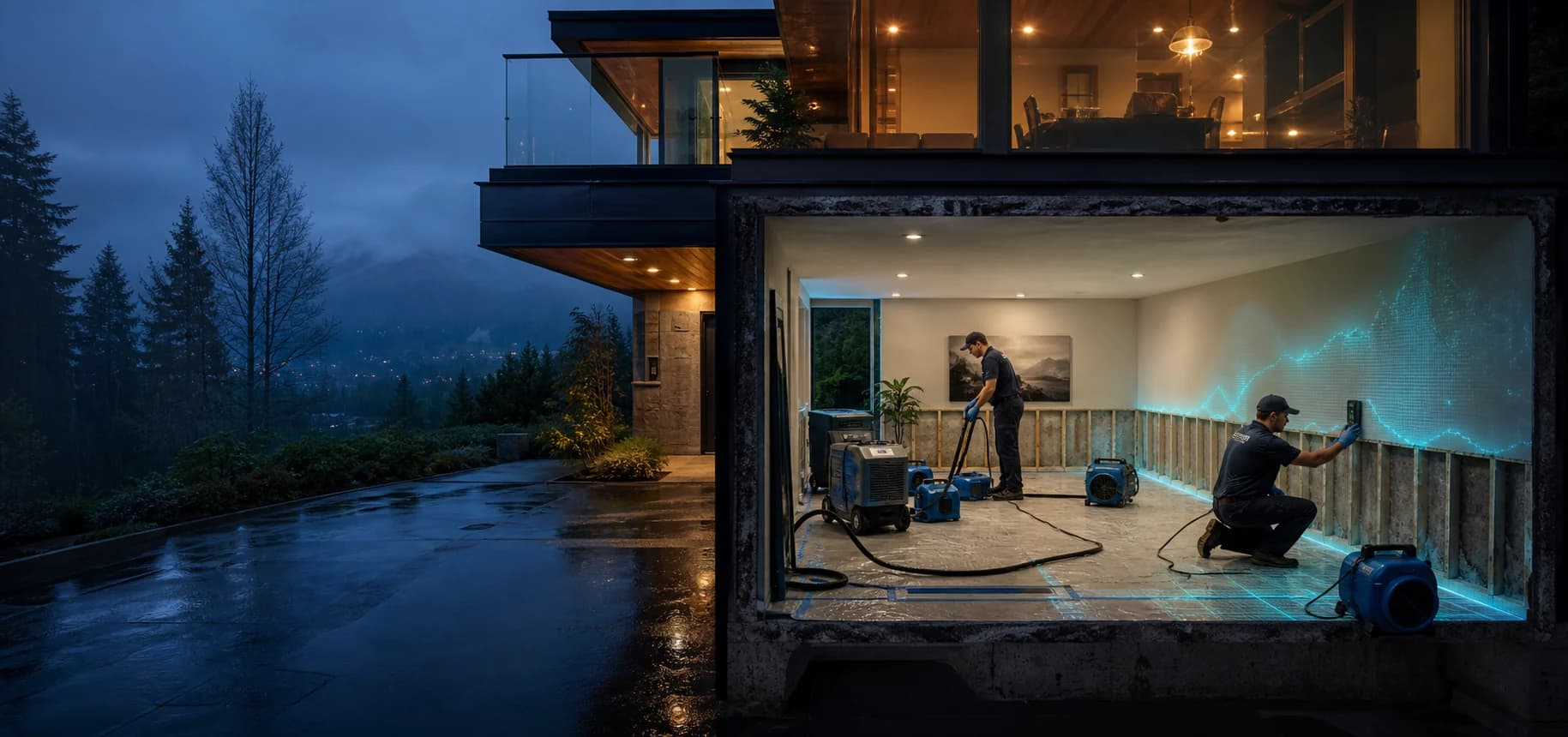
Water loss deserves prompt attention.
Start with one call or a four-field request.
Questions after a water loss
Practical context before work begins.
General information for early decisions; it is not an inspection, health diagnosis, or insurance decision.
What should I do first after finding water damage?
Prioritize people and immediate hazards. If it is safe, stop the water source, avoid electrical or contaminated water, and photograph visible conditions. Contact emergency services or the appropriate utility when there is an immediate danger.
How do you find moisture behind walls or flooring?
A qualified provider may combine visual assessment with appropriate moisture instruments and readings from connected materials. A dry-looking surface alone does not establish the condition behind it.
Does every wet room need demolition?
No. The correct approach depends on the water source, material type, amount of exposure, accessibility, and condition. Some materials may be dried in place; others may need controlled removal.
How long does structural drying take?
There is no responsible universal number. Materials, weather, room geometry, equipment placement, and progress readings all affect the drying period. The plan should be adjusted using evidence.
Can you help with insurance documentation?
You can organize photos, dates, receipts, communications, and any provider records. Coverage and reimbursement decisions remain with your insurer and policy; this website does not act for an insurer.
What if I am concerned about mould after a leak?
Health Canada advises correcting the moisture source and cleaning visible mould. Large areas—more than three square metres—need professional assessment and cleanup. Discuss suspected health effects with a healthcare professional.
Record the loss while details are fresh